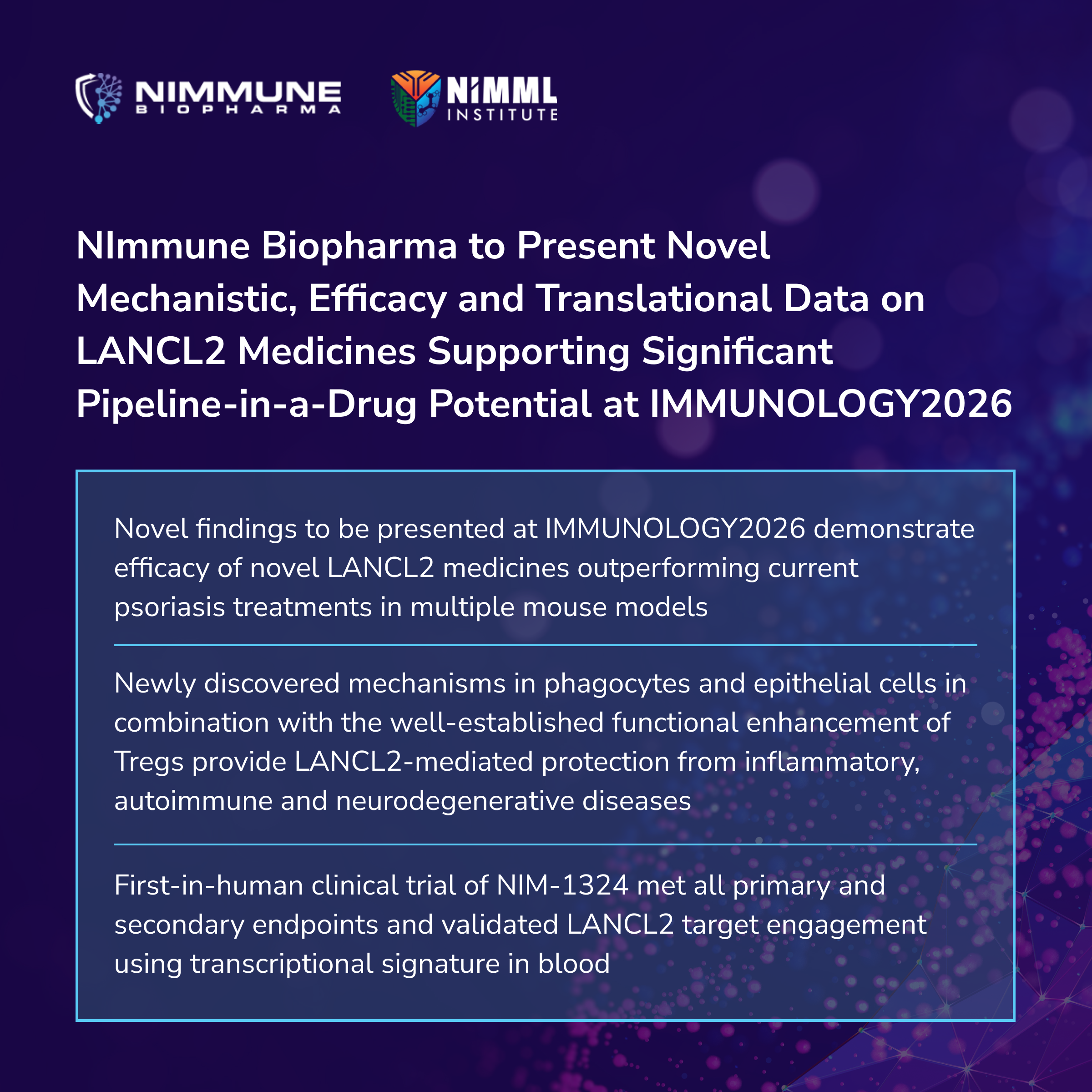
Psoriasis (PsO) is a complex immune-mediated disease that afflicts 100 million people. Omilancor is a locally-acting, small molecule that selectively activates the Lanthionine Synthetase C-like 2 (LANCL2) pathway, resulting in immunoregulatory effects at the intersection of immunity and metabolism. Topical omilancor treatment in an imiquimod-induced mouse model of PsO ameliorates disease severity, epidermal hyperplasia and acanthosis. Further, pharmacological activation of LANCL2 results in significant downregulation of proinflammatory markers including local reduction of IL17, and infiltration of proinflammatory cell subsets. These therapeutic effects were further validated in an IL-23 PsO model. This model reported increased preservation of homeostatic skin structure, accompanied by a decreased infiltration of proinflammatory T cell subsets. In CD4+ T cells and Th17 cells, the LANCL2 pathway regulates proinflammatory cytokine production, proliferation and glucose metabolism. Metabolically, the loss of Lancl2 resulted in increased glycolytic rates, lactate production and upregulated enzymatic activity of hexokinase and lactate dehydrogenase (LDH). Inhibition of LDH activity abrogated the increased proliferation rate in Lancl2−/− CD4+ T cells. Additionally, topical omilancor treatment decreased the metabolic upregulation in keratinocytes, keratinocyte hyperproliferation and expression of inflammatory markers. Omilancor is a promising topical, LANCL2-targeting therapeutic candidate for the treatment of PsO and other dermatology indications.
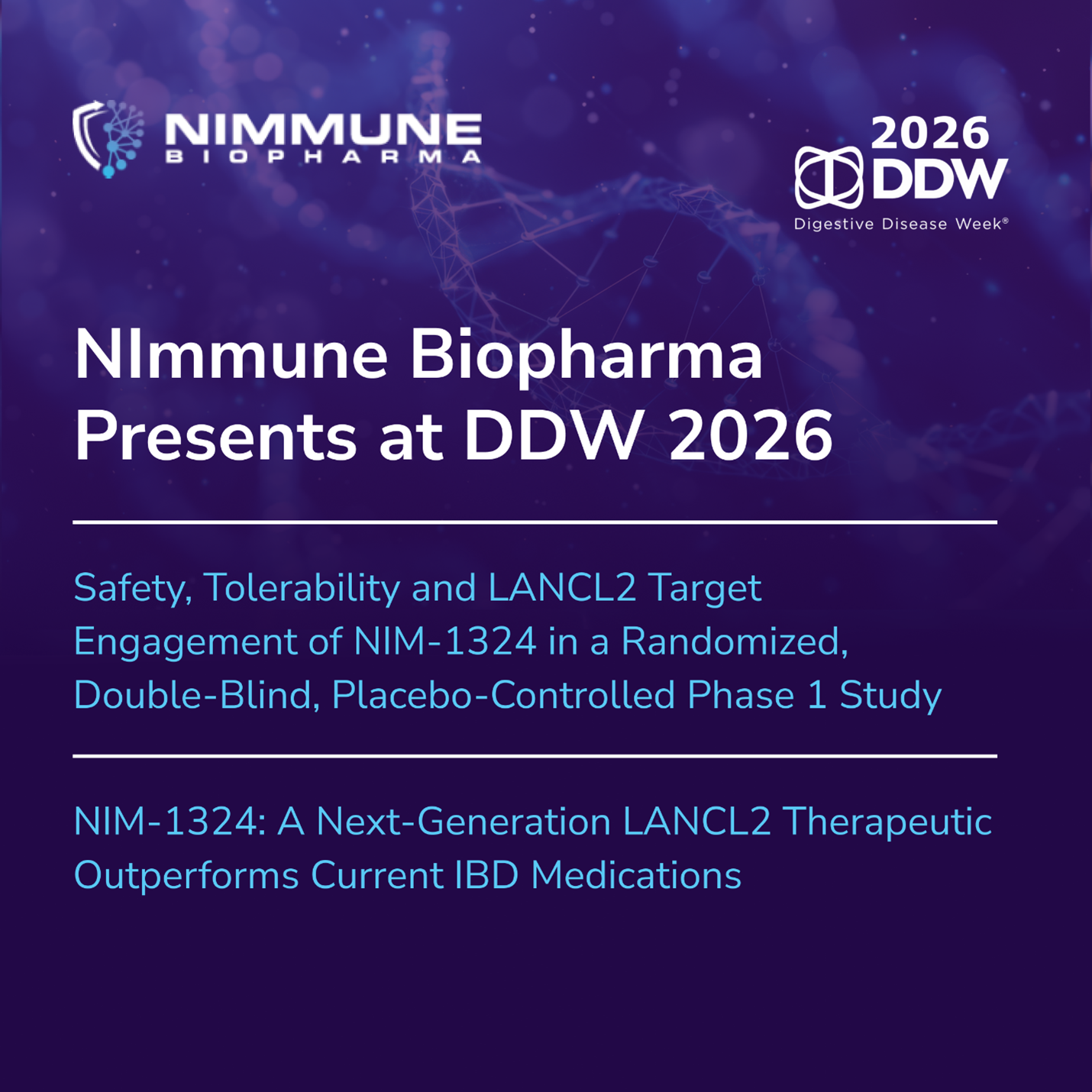
NImmune Biopharma Announces Presentations at Digestive Disease Week 2026 Supporting a Differentiated Profile and Superior Efficacy of Oral, Once-Daily NIM-1324 for IBD
NImmune Biopharma Announces Presentations at Digestive Disease Week 2026 Supporting a Differentiated Profile and Superior Efficacy of Oral, Once-Daily NIM-1324 for IBD
Download Press Release New data presented at DDW demonstrates that NIM-1324 outperforms current IBD medications, establishes Phase 1 safety, tolerability and LANCL2 target engagement in humans Supports the efficacy of NIM-1324, a de-risked, safe and well-tolerated,...